Storm Season Amber Hunting: When and Where to Search UK Beaches
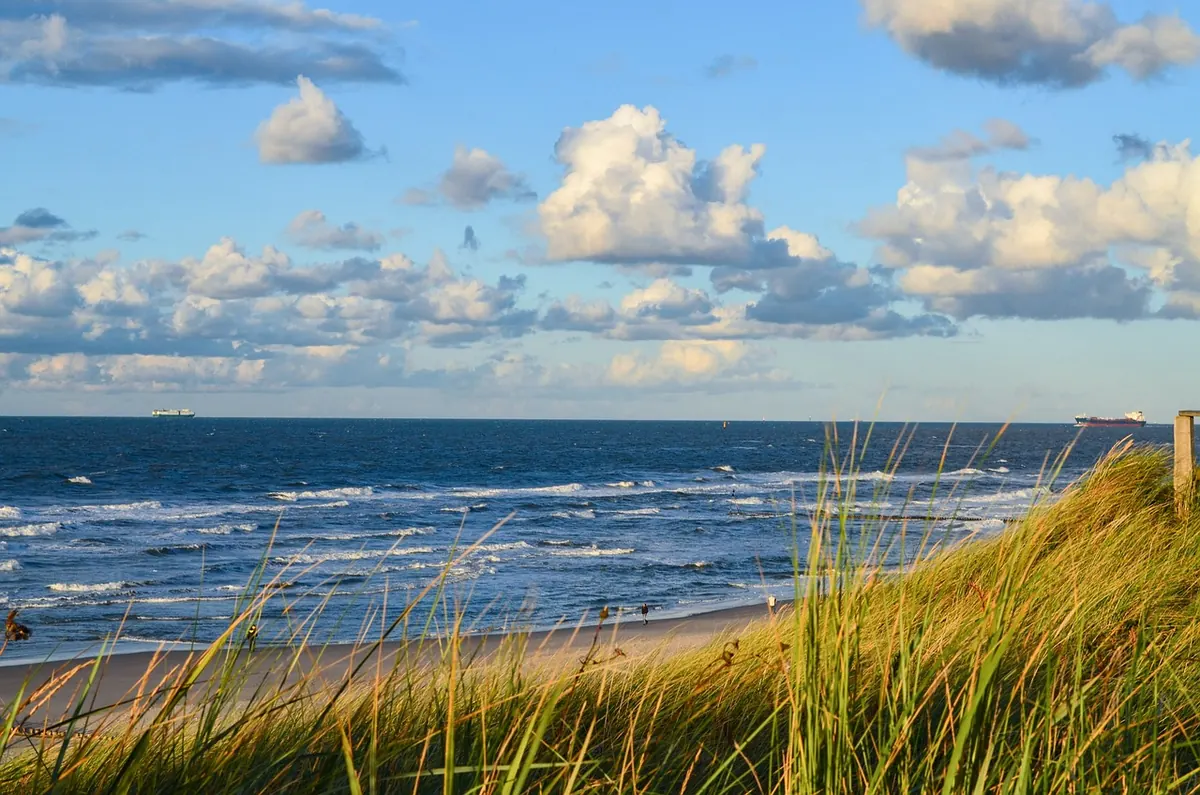
The first proper north-easterly of the winter does two things at once. It drags a long, heavy swell down across the North Sea, and it drives everything that swell lifts towards the shore. For most beachcombers that means a soaking and a bag of weed. For amber hunters it means a short window when the strandline might actually give something up.
Amber has been turning up on British beaches for as long as people have walked them, and the east coast is where most of it lands. The season for it is roughly October to March, and the best days are the ones most people sensibly stay indoors.
Why Winter Storms Move Amber Ashore
Most amber found here is Baltic: fossilised resin from conifer forests that grew around the Baltic Sea tens of millions of years ago. It rests in blue earth deposits on land and in gravels and clays offshore, and it has been travelling west ever since the last ice sheets and every storm since.
The reason it travels so well is its density. Amber is only slightly denser than seawater, so it is far easier for rough water to lift, roll and carry than a pebble of flint or quartz. A single sustained gale can shift material that has been sitting buried offshore for years.
Calm-weather waves do very little. What matters is the combination: long-period swell to scour sand off the beach and the shallow seabed, a big spring tide to carry the loosened material up the beach, and an onshore wind to push the lightest of it into a line along the high-water mark. When the water drops, whatever the sea has picked up is left behind in the strandline.
Timing beats luck. Get there as the tide turns and walk the ebb down the beach. The freshest line, still wet and barely disturbed, is often the one the last high tide has only just left.
Reading the Beach
Amber is small, light and the colour of honey, butter or dark toffee, which is exactly why it is missed. Look for it in the places where light material collects rather than where you would look for fossils or pebbles.
- The strandline itself. Not just the top line of weed, but the second and third lines behind it, left by earlier tides.
- Weed clumps and debris. Pick through by hand rather than kicking it about; amber often sits tucked against a piece of kelp or a crab shell.
- Gravel and shingle patches. Sea-worn amber looks a lot like a piece of orange-brown flint or carnelian at arm's length, so scan slowly and pick up anything that looks slightly too warm or too smooth.
- Scoured surfaces. After sand has been stripped away, freshly exposed clay and gravel can hold material that has not been seen for years.
- Edges of groynes, sea walls and rock pools. Anything that traps floating debris will trap amber with it.
Bright overhead sun flattens everything and hides the translucence. A low winter sun, wet stones and a bit of cloud are much kinder — that is when amber glows and the rest of the beach goes grey.
The Conditions Worth Waiting For
Any onshore gale will do, but north and north-easterly winds tend to work best on the east coast, and the strongest results usually follow two or three days of big swell rather than a single squall. Pair that with a spring tide, when the water reaches furthest up the beach, and you have the setup that fills the strandline.
Work the beach on the falling tide, in daylight if you can manage it, and start at the top of the beach before the water retreats. By the time the tide is low you may have covered the best ground already.
Telling Amber From Everything Else
There is a lot of lookalike material on British beaches: jet, cannel coal, sea glass, weathered plastic, and resin used in modern boat-building and fishing gear. A few simple checks, used together, sort most of it out.
- Warmth and weight. Amber feels warm and light in the hand, more like a hard wax than a stone. Jet and cannel coal are heavier and feel cold.
- The salt water test. Make a saturated brine — keep stirring salt into warm water until no more will dissolve — and drop your find in. Amber floats or hovers. Most pebbles, jet and glass sink immediately. Some plastics also float, so treat this as one clue, not a verdict.
- Static. Rub the piece briskly on wool or your sleeve and hold it near a few torn scraps of tissue paper. Amber picks them up.
- Look at the surface. Sea-worn amber is smooth and rounded, often with a faintly crazed or "sun-spangled" skin, and may show tiny bubbles or cloudy patches inside when held to the light. A genuine insect inclusion is rare.
- Smell, gently. Rubbing hard can raise a faint resinous, pine-like scent. Do not test by burning it — you will damage the piece and possibly a good find.
Where to Try Around the UK
The North Sea coast is the main hunting ground. In Norfolk, the beaches around Cromer, Mundesley and Happisburgh regularly produce amber after northerlies, and the Suffolk coast from Dunwich to Southwold has a long history of it. Further north, the Lincolnshire and Holderness coasts — Mablethorpe, Skegness, Hornsea, Fraisthorpe, Barmston — can be excellent after a scouring storm, as can the beaches either side of Whitby and along the Northumberland coast.
Amber also turns up on parts of the Essex and Kent coasts and on Scottish beaches facing east, from Fife up towards Angus and Aberdeenshire. West-facing beaches see it far less often, though it is not unheard of. Within any stretch of coast, the productive spots tend to be sheltered bays and coves that trap floating weed, rather than long exposed stretches where material is swept straight past.
Staying Safe and Collecting Responsibly
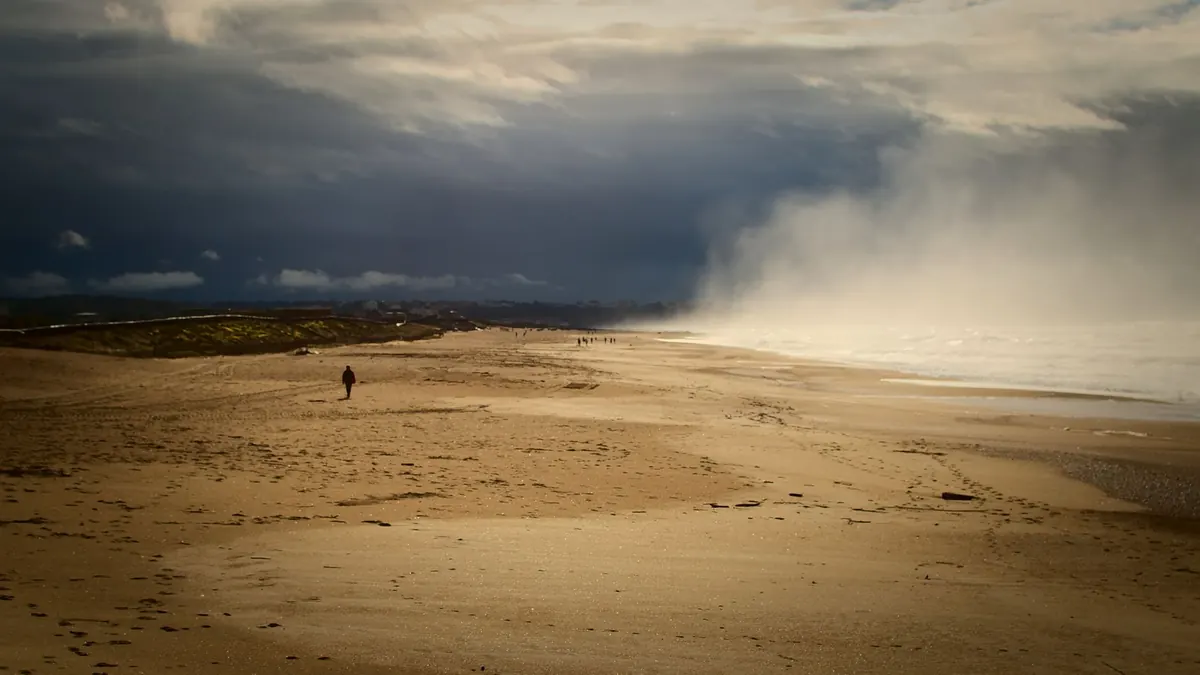
Storm beaches are genuinely hazardous places, and most of the risk comes from the sea rather than the shingle. Check a tide table before you go and know when the water turns. Storm surges can push the tide well above prediction, and flat beaches with a channel or a river mouth cut people off quickly.
- Never search a beach you cannot walk off in more than one direction, and never let the tide get between you and the path.
- Avoid soft mud, especially around estuaries and the Wash, and do not walk out onto sand or mudflats to reach a tempting patch of debris.
- Keep clear of the base of cliffs, after rain or a thaw in particular. Rockfalls and mudslides do not give warning.
- Wear gloves and boots. Storm strandlines contain broken glass, wire, fishing hooks and worse. Cover any cuts, and wash your hands before eating.
- Tell someone where you are going and when you expect to be back. Mobile signal is patchy on many of these beaches.
- If you see anything that looks like military debris or ordnance, do not touch it. Note the location from a safe distance and report it to the police.
- Treat cold water with respect. Winter sea temperatures sap strength quickly; never wade in to reach something, and dress in layers with a waterproof outer shell.
A good find is never worth a flooded causeway, a falling cliff or an hour in cold water. There will be another storm.
Collecting a few pieces of sea-worn amber from the strandline for your own cabinet is usually fine, but access rules vary: some foreshores are private, some sites are nature reserves or protected for wildlife, and local byelaws can restrict collecting. Check with the local council or landowner before you set out, and if a find looks scientifically interesting — an unusual colour, a distinctive inclusion, or a piece still in its original matrix — photograph it and offer it to a local museum rather than assuming it is yours to keep. If you are unsure about the legal position, take proper advice.
A Practical Plan for the Next Storm Tide
Watch the forecast for a named storm or a spell of strong northerlies, then look for the first big spring tide afterwards. Check the tide table the night before and pick a beach with a safe exit and a decent length of strandline. Pack a saturated brine jar for testing, a soft cloth or padded tin for your finds, gloves, boots, a torch, a warm layer and a charged phone.
Arrive an hour before high water, work the top of the beach first, then follow the ebb down. Walk slowly, look at the ground rather than the horizon, and turn over weed rather than kicking through it. Most trips will end with a pocket of pretty pebbles. Every so often, one of them won't sink in the brine — and that is the feeling the whole season is about.
Photo: Philippe HECKEL / Pexels