A Short History of the Baltic Amber Trade: From Prehistory to Today
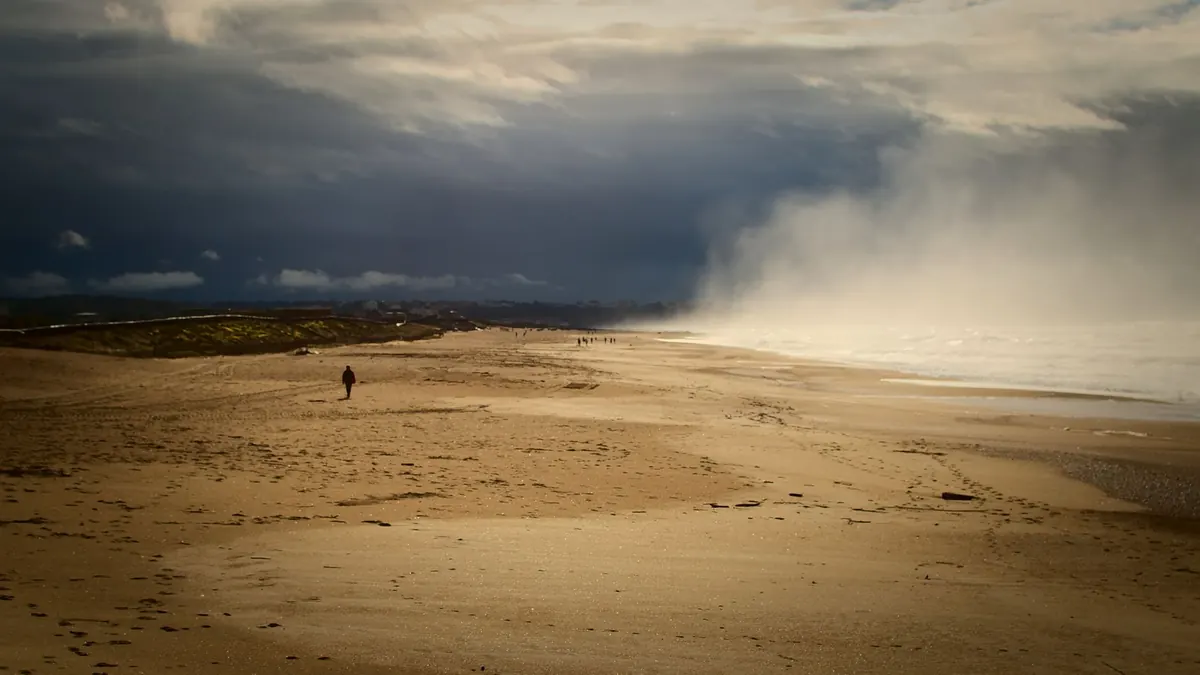
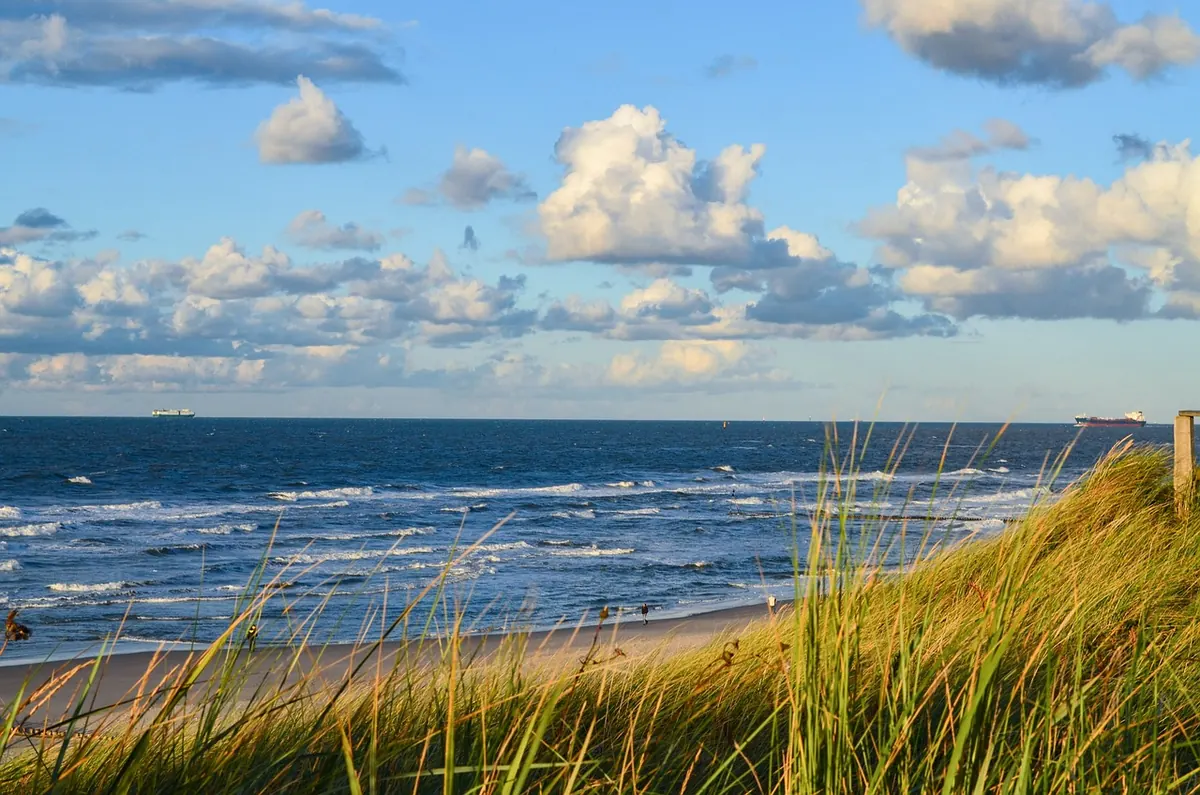
A storm rolls along the Lithuanian coast, and by first light the beach is dotted with people bent double, scanning the shingle. What they are looking for is a lump of fossilised resin, warm to the touch, light enough to float. It is a small thing to carry across a continent. It has been carried across continents anyway, for thousands of years.
Tracing that movement is one of the pleasures of collecting Baltic amber. The stone in your hand has a route behind it — a river, a road, a guild rule, a shipping manifest — and knowing the route makes the material easier to read.
Where Baltic Amber Comes From
Baltic amber began as resin from conifer forests that grew across what is now Scandinavia and the Baltic region tens of millions of years ago. The resin hardened, was buried, and became concentrated in layers of sediment that geologists call blue earth. The sea erodes those layers, washes the amber loose and, after a good storm, dumps it on beaches from Poland up to Latvia and beyond.
The richest deposits sit around the Sambian peninsula, in the Kaliningrad region, with significant material also in Lithuania, Latvia and northern Poland. For most of history the harvest was gathered by hand: beachcombing after gales, or raking the shallows with nets. Dredging and open-cast mining came much later, and changed the volume of supply without changing the geography.
Prehistory: Exchange Before Money
Amber was moving long before anyone wrote about it. Neolithic beads have been found far from the coast, and chemists can now match artefacts to a Baltic source by analysing the resin's molecular fingerprint. That has confirmed what archaeologists long suspected: pieces of northern amber reached the Mediterranean world in the Bronze Age, probably passed hand to hand through many intermediaries rather than carried by a single merchant.
By the Roman period, demand was serious enough to be worth complaining about. Pliny the Elder grumbled about the fashion for amber amulets and the price people paid, and mentions a Roman official sent north to secure supplies. Roman buyers wanted amber for jewellery, for medicine, for decoration and for display. The northern tribes wanted what Rome made: glass, bronze vessels, coins, textiles.
The Amber Road
The route that grew up to serve that trade is usually called the Amber Road. It was not one road but a shifting network of rivers, fords, passes and market towns. A common broad outline runs something like this:
- Amber is gathered along the Baltic shore and traded inland to settlements on the Vistula and its tributaries.
- Goods move south through the Moravian Gate, a natural gap between the Carpathians and the Sudetes.
- From the Danube basin, routes split west towards the Alps and south towards the Adriatic.
- At the northern Adriatic — Aquileia was a major outlet — amber enters the Mediterranean economy and is shipped onwards.
Along the way the cargo changed hands many times, and so did its meaning. A raw nodule on a Baltic beach became a pendant in a Danubian village, a ring in a Roman town, an offering in a grave in Egypt. That layering of value is one reason early amber is so hard to price: provenance, condition and context all matter far more than weight.
Monopoly, Guild and Crown
In the medieval period the trade became something to control. The Teutonic Order, ruling Prussia from the thirteenth century, claimed rights over amber found on its lands and shores, and enforced them. Unauthorised collecting carried severe penalties, and the Order ran collection and sale as a profitable monopoly.
Craft regulation followed. Amber turners in Danzig and other Baltic towns organised into guilds, with rules about who could buy raw material, how it was allocated, and what could be sold elsewhere. Guilds kept quality up and competition down. They also left behind the paper trail that helps modern collectors date old pieces: workshop marks, standard forms, and a preference for certain shapes that changed with fashion.
Objects of State
By the seventeenth and eighteenth centuries amber had become a diplomatic material. Princes assembled amber cabinets; whole rooms were panelled in it. The most famous, the Amber Room, was presented to Peter the Great and later installed in a Russian palace, before being removed during the Second World War and lost to view. Pieces of historical amber furniture and panelling rarely reach the open market, and when they do, documentation matters more than the material.
Mining, Revival and the Modern Market
Industrial mining from the nineteenth century onwards turned amber into a bulk commodity, and the twentieth century added two more forces: synthetic substitutes and a collecting public. After 1945 the largest deposits lay in the Soviet Union, and amber became both an industry and, in the late Soviet years, a symbol of Baltic identity and independence movements.
Today the market is genuinely international. Baltic material still dominates, but collectors also seek Dominican blue amber, Mexican and Burmese material, and Indonesian resin. Within Baltic amber itself, tastes run to:
- Inclusion specimens — insects, hairs, air bubbles — where clarity and the quality of the inclusion matter more than size.
- Natural but polished nodules and cabochons, valued for colour and transparency.
- Historical beads, including nineteenth- and twentieth-century trade beads that travelled to West Africa and beyond.
- Mid-century and Soviet-era jewellery, where design and maker's marks drive interest.
Buying With the History in Mind
A little knowledge of the trade makes you a better buyer. Ask any seller to state origin and treatment in writing: whether the piece is natural, heat-treated for clarity, or reconstituted from pressed fragments. Heat treatment is normal and not dishonest — but it should be disclosed. If you are buying antique beads or jewellery, ask what the provenance is and whether there is any documentation.
Basic checks are cheap and useful. Baltic amber floats in a saturated salt solution, feels light and slightly warm, and usually fluoresces under ultraviolet light. Copal, a much younger resin, can look convincing but is softer and behaves differently under solvent and UV tests. For anything expensive, buy from a dealer with a returns policy, and treat certification as a supporting document rather than a guarantee.
Finally, keep expectations sensible. Amber is a pleasure to own and study, and good pieces hold interest for decades, but it is a collectables market like any other. Buy what you enjoy looking at, learn the material slowly, and if a purchase involves a serious sum, take proper advice before committing.
Photo: Henning_W / Pixabay